Travel guide
Dromedaries and camel trekking: what the words mean
Understand the one-humped dromedary, the role of the cameleer, and the difference between riding a camel and travelling with a caravan.
Why “camel” and “dromedary” both appear
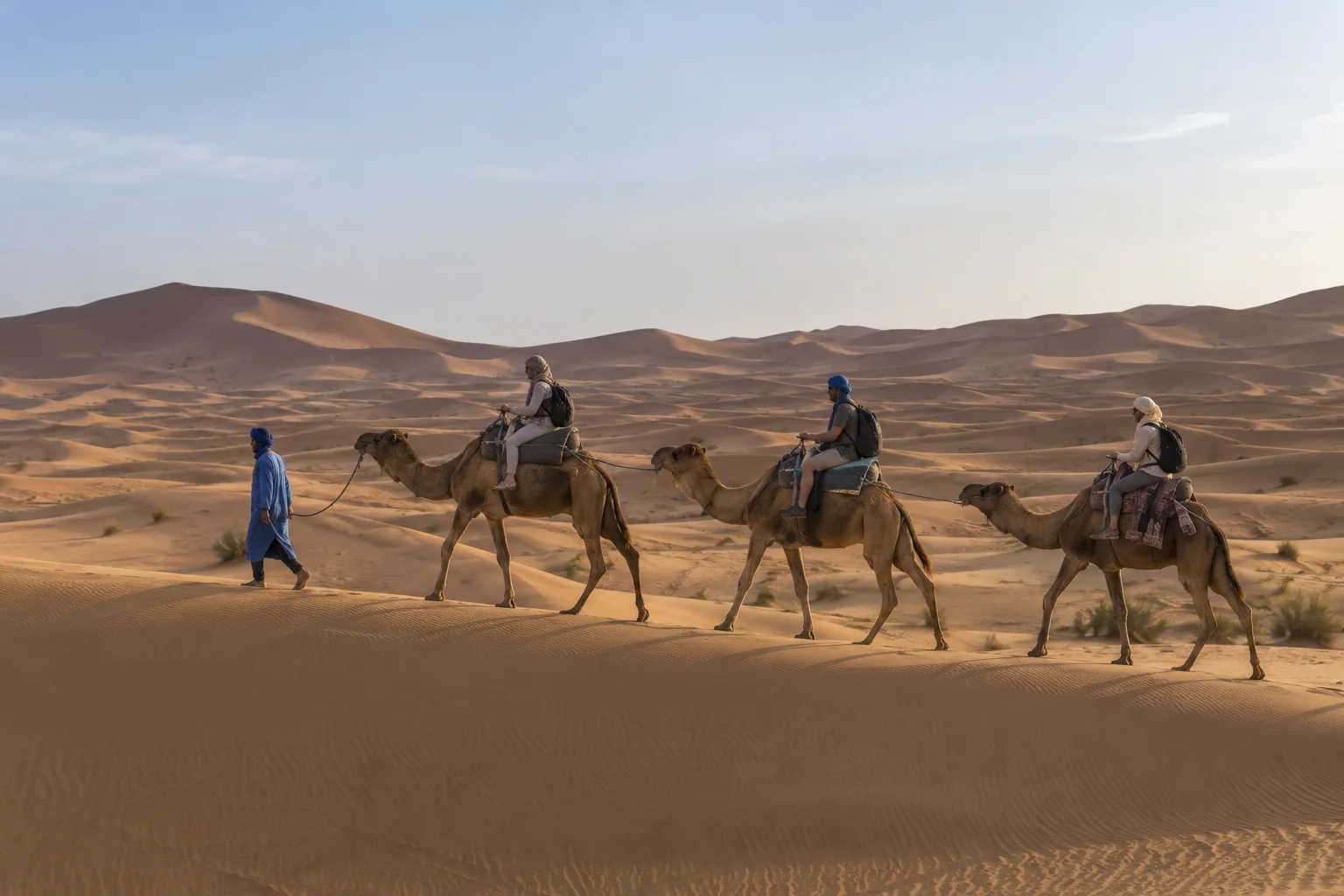
A dromedary is the one-humped camel familiar in Moroccan desert travel. The two-humped Bactrian camel is a different kind. In English tour descriptions, “camel trekking” commonly refers to travel with dromedaries; French descriptions often say “dromadaire”.
The animal’s hump stores fat, not a container of drinking water. That adaptation does not remove the need for appropriate care, feeding, water and rest. A desert animal should not be treated as an unlimited carrying machine.
The cameleer’s role
A cameleer handles and leads the animals. Your trekking guide may have additional responsibilities for the route, communication and group. Ask who accompanies the trip and who can answer your questions in your preferred language.
Follow the handler’s instructions when approaching, mounting or dismounting. Do not feed an animal without permission. If you feel uncomfortable, tell the team before the activity starts so that a suitable alternative can be discussed.
Riding and trekking are different arrangements
A caravan trek can involve walking while animals carry equipment. A short camel ride may be one activity within a vehicle-based tour. Never infer several days of riding from the words “camel trek” alone.
Ask how much walking is planned, whether riding is available and how luggage is transported. If riding is important to you, confirm the arrangement before booking. Individual suitability should be discussed with the operator rather than assumed from a generic tour photograph.
| Term in a programme | Clarify |
|---|---|
| Camel ride | Duration and starting point |
| Camel trek | Walking stages and any riding |
| Caravan | Animal and luggage arrangements |
| Cameleer | Who handles the animals and accompanies the group |
Make welfare part of the conversation
Ask how the team manages loads, rest and animal condition, and how concerns can be raised. Do not demand that an animal continue if the handler needs to stop or change the activity. A lower price or a longer advertised ride is not evidence of better care.
Our ethics page sets out the questions to discuss before choosing a camel experience. Read it alongside the exact itinerary, since a general statement cannot describe every departure.
Sources and further reading
Geographic and cultural references used for this guide. Access, facilities and the final itinerary should be confirmed for your travel dates.