Travel guide
When to visit the Moroccan desert: the seasons
Two ideal windows, one beautiful cold season, and three months we honestly advise against.
The short answer
October–November and February–April are the months to aim for. December and January are superb and quiet, with the purest light of the year, if you accept nights near freezing. September and May work with adjustments. June to August is the wrong season for anything overnight in the dunes — and we say so even though it costs us bookings.
Autumn: October and November
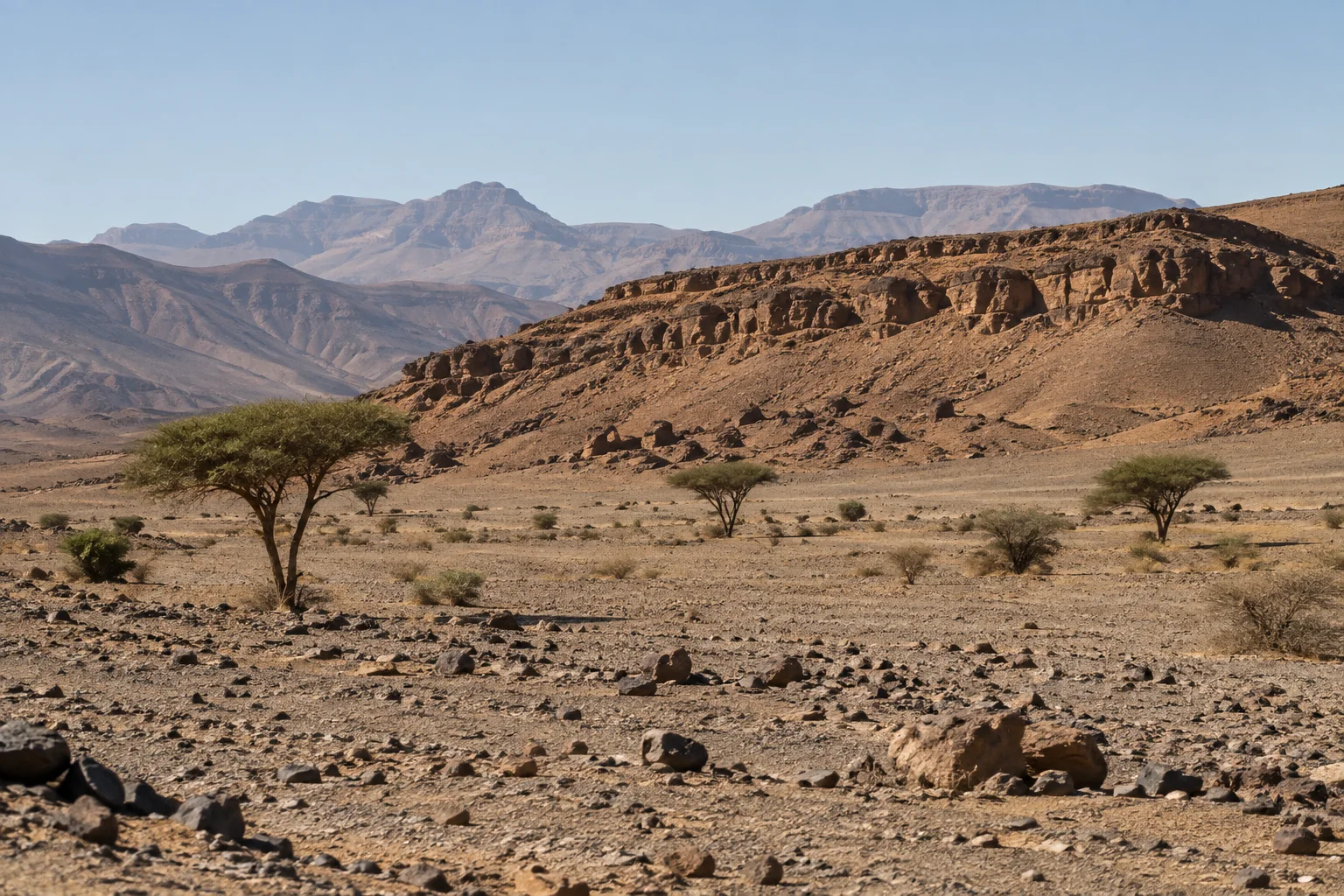
October brings gentle warmth and golden light: 27–32 °C by day, around 15 °C at night. November is the best compromise between temperature and crowds — 22–27 °C by day, about 10 °C at night. Every product we run is at its best, from the day trips to the four-day trek.
Winter: December to February
The purest light of the year, and the emptiest desert. The price is the night: 0–8 °C at the bivouac, which is why bedding is provided from October to March and why a hat, gloves and wool socks belong in your bag. December is “superb and calm”; the Christmas–New Year week is the one exception, booked weeks ahead.
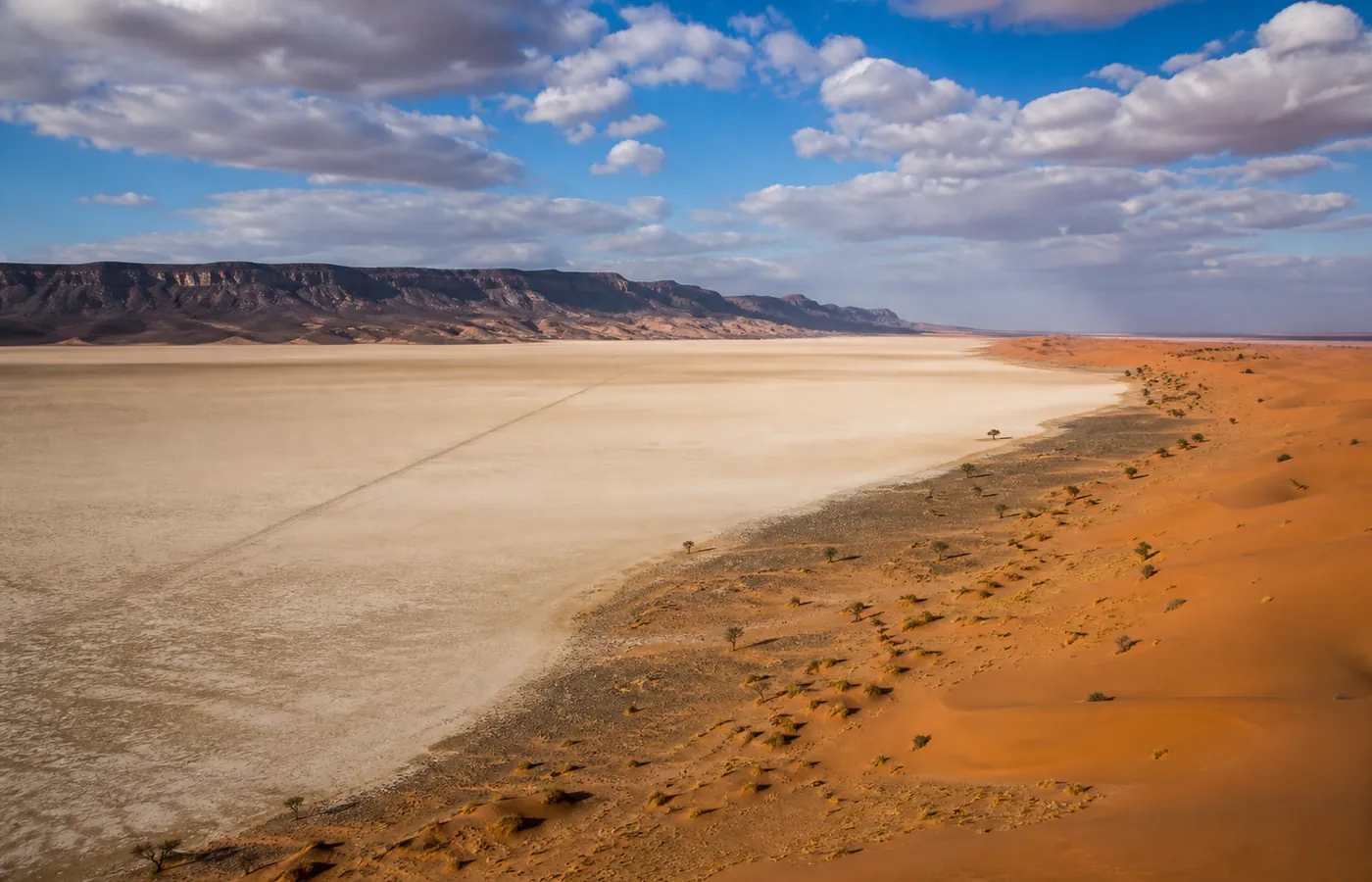
Two practical notes for this season. Ramadan currently falls in the February–March window and coincides with high season — our trips run normally, and it is a special time to be here. And in wet winters Lac Iriki can fill with water for weeks; ask us what the lake is doing when you book.
Spring: March to May
February to April balance comfort and crowds: 20–29 °C by day, 6–18 °C at night, with the lake sometimes still in water. The caveat is wind — the chergui sand wind is most frequent from March to May, and a handful of days are unpleasant for riding; storms are usually forecast a day or two ahead and we adjust departures. Easter, like New Year, books up weeks in advance. May is workable but getting hot, with nights of 18–24 °C.
Summer: June to August
Daytime 40–47 °C, nights 26–30 °C — even at night the heat is punishing under a tent. We do not run bivouac nights in the dunes in these months. What we do instead: a night in the village or at the oasis, and departures at 6:00 for Lac Iriki, back before the midday heat, with the light and the coolness at their best. If summer is your only option, that is the honest version of the desert.
Frequently Asked Questions
When are the stars best?
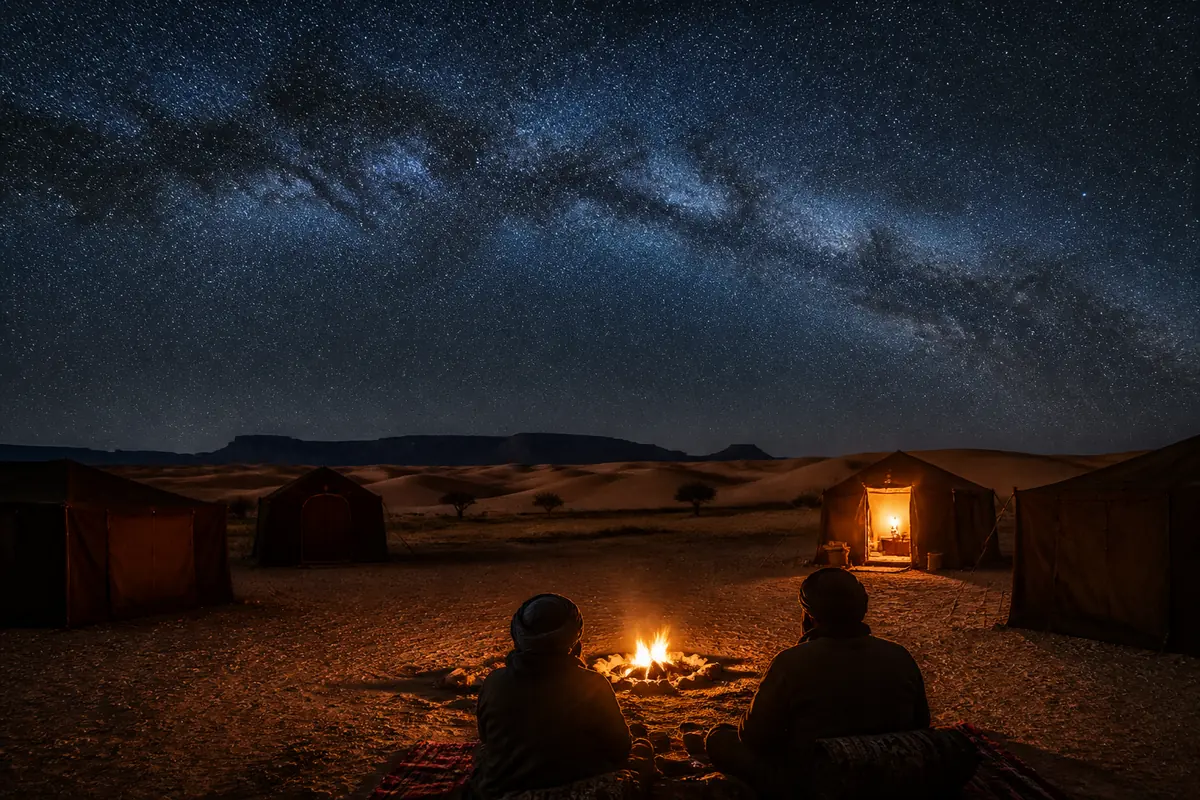
Any moonless night — Chegaga has no light pollution for 60 km. Winter skies are the clearest; check the moon phase when choosing your dates.
Does it ever rain?
A few days a year, mostly autumn and spring. After heavy rain the clay of Lac Iriki becomes impassable and guides use the border track — a detour, not a cancellation.
How far ahead should I book for the holidays?
New Year, Christmas and Easter fill weeks in advance; for the 20 December – 2 January period our free-cancellation window also extends to 30 days before departure.