Travel guide
Sahara landscapes: dunes, rock, dry lakes and watercourses
Learn the travel terms erg, hamada, reg, sebkha and oued, and understand why a Morocco desert trek crosses more than sand dunes.
A desert is more than dunes
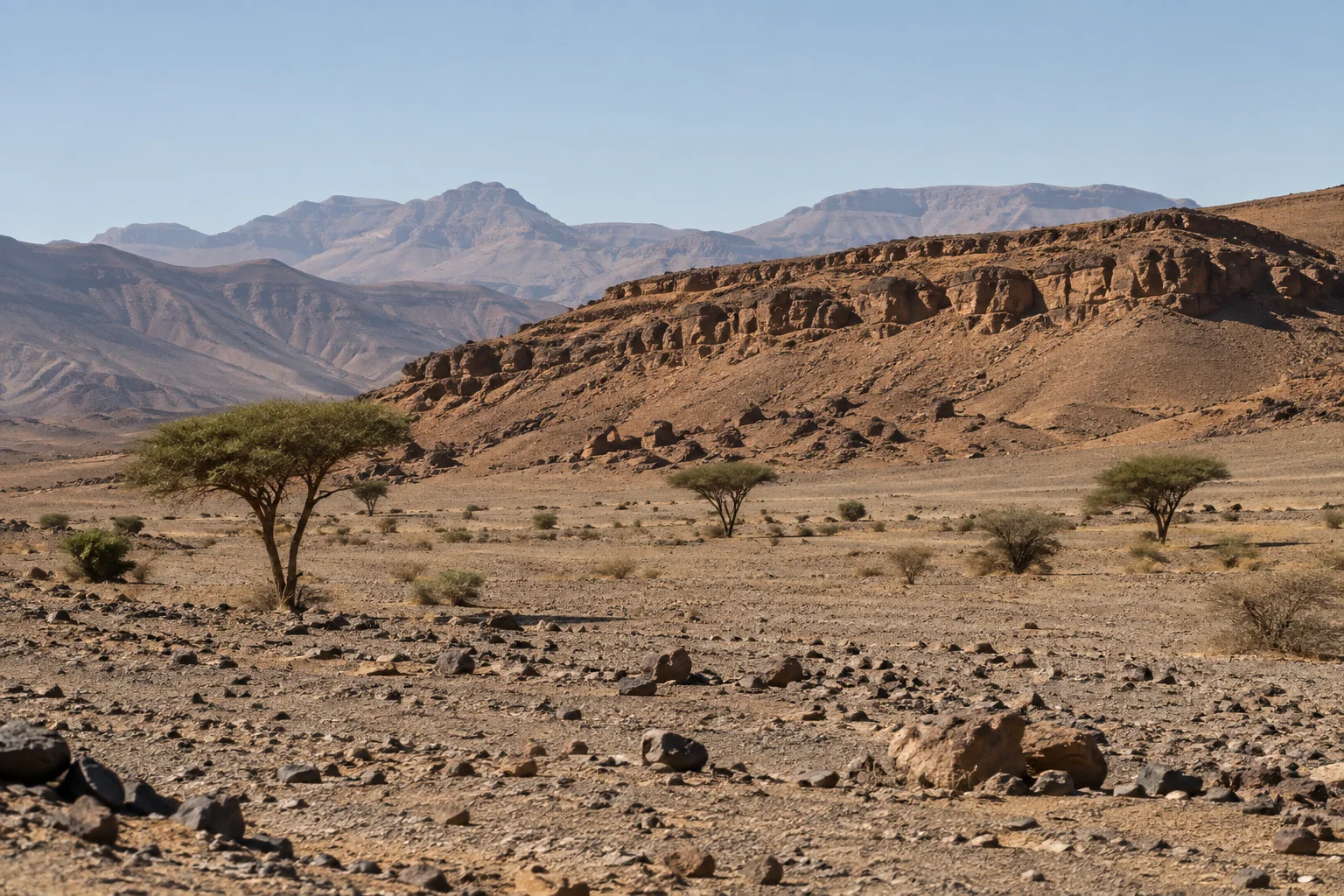
A Sahara journey can combine sand, bare rock, stony plains and dry basins. Around Foum Zguid and Iriki, the changing surface is part of the experience. A photograph taken on a dune cannot show the full terrain of a multi-day route.
Use landscape terms to ask better questions about your trip. They help distinguish the place where you sleep from the ground you cross during the day. They do not establish whether a track is currently suitable for a vehicle or a walking group.
Erg: a dune field
An erg is an area of wind-deposited sand with dunes, sometimes called a sand sea. Erg Chigaga and Erg Chebbi are different dune areas in Morocco. A route with an erg in its name may still involve long stages across other surfaces.
Soft sand changes the effort of walking. Ask how much time is spent on dunes and whether the route can be adjusted. A sunset walk near camp differs from a full stage carrying a day bag.
Hamada and reg: rocky and stony ground
Hamada generally describes a rocky desert surface, while reg describes a stony or gravel-covered plain. Desert pavement is a closely packed surface layer of stones. These terms are useful contrasts to dunes, although local travel descriptions may not use them precisely.
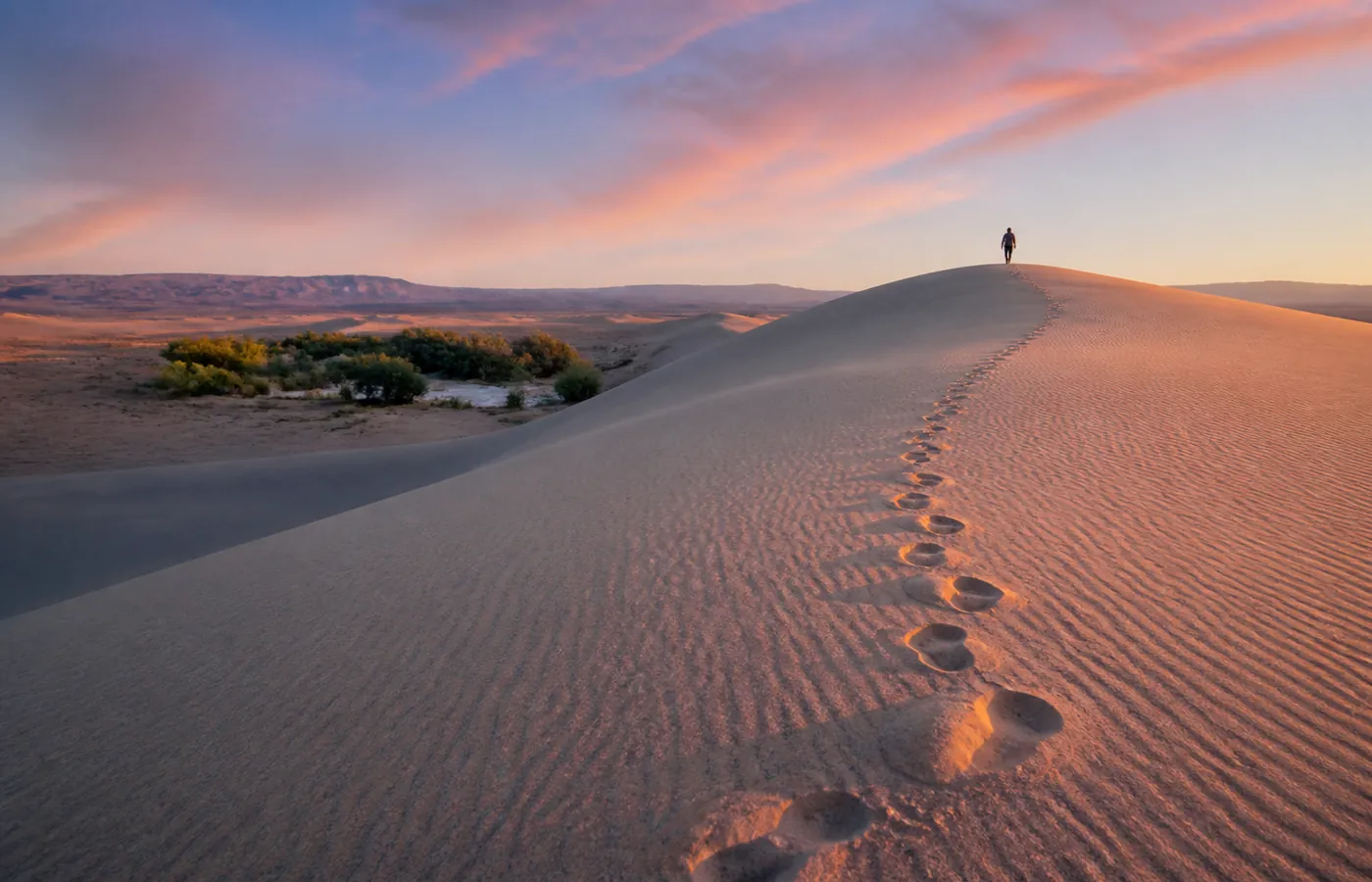
Choose footwear for the whole route, not just the sand shown in the cover image. Ask about uneven ground, shade and the length of uninterrupted walking stages.
Sebkha: a saline basin
Sebkha is a term used for a low-lying saline basin or flat. A pale, dry-looking surface should not be treated as proof of safe passage. Conditions can differ beneath the surface and after rain.
Lac Iriki is often described through its dry lake landscape. The word “lake” does not promise standing water on your visit. Ask what conditions and route are expected close to departure.
Wadi or oued: a watercourse
Wadi and oued are terms for a watercourse or valley, which may be dry when you see it. Dry appearance does not make a channel an appropriate camping or driving place. Follow the guide’s assessment of weather and access.
Do not use a general glossary as a navigation guide. A locally agreed route and up-to-date conditions matter more than the terrain label on an old map.
Fossils and rock engravings are different
A fossil is evidence of past life preserved in rock; an engraving is a human-made mark. Ammonites and trilobites are names you may encounter in fossil discussions or shops. Their mention in regional tourism does not establish that a particular object was found on your route.
Look without removing, scratching or rearranging material. Ask the guide to explain any stop and leave objects in place. A shop label is not proof of provenance, age or authenticity.
Sources and further reading
Geographic and cultural references used for this guide. Access, facilities and the final itinerary should be confirmed for your travel dates.